Photographic Charters - Why 2026 is the Time to Book One?
In this blog we are going to explore what photographic charters are, and how they provide the perfect place for photographers to flourish. Master new skills, try out new settings and ultimately get shots that get you from the nervous first time chartist to front cover of heritage railway magazine. Below you will find some tips and tricks that have helped me gain confidence in going to these events and how to get the most out of them.
What is a Charter?
It is a day where you can take as many photographs of a locomotive (or locomotives, depending on the charter) as you wish, usually at lineside locations. You may have anywhere from three to six run-pasts to get the right shot. On top of this, you will also find that organisers are keen weather watchers. They will call the train forward when the lighting is at its best. Therefore, that one patch of sun you might have missed on a gala day or a normal running day gives you the chance to capture the locomotive at its best.
However, it must be noted that charters are not weather-immune and can unfortunately fall prey to the English weather. In fact, my first two charters experienced rain for the majority of the day. But what else can you expect at a charter?
Usually, you can expect anywhere from around 20–35 photographers at a charter. This varies from railway to railway and also depends on the space available at the lineside locations. This may mean that some rotation is required to give everyone a fair chance at a shot, but it usually works out and everyone gets the images they are after.
You will also find that locomotive crews usually work the locomotive a bit harder than on a normal running day, allowing you to capture some fantastic exhaust in your shots. You may also get opportunities to photograph the locomotive in places where you wouldn’t normally expect it to work hard. This could be a downhill gradient you have always wanted to shoot at, or a location you may have hoped to photograph during a gala but never previously had the chance.
A charter can run from early in the morning, sometimes as early as 6am, through to late in the evening, occasionally after 21:00 during summer charters. It is an excellent opportunity, and you may find yourself with nine hours or more of photography. This could be in freezing cold or boiling hot conditions, so it is important to make sure you have the right food and drink with you to last the day. Depending on the photoshoot, there can also be a significant amount of walking between locations.
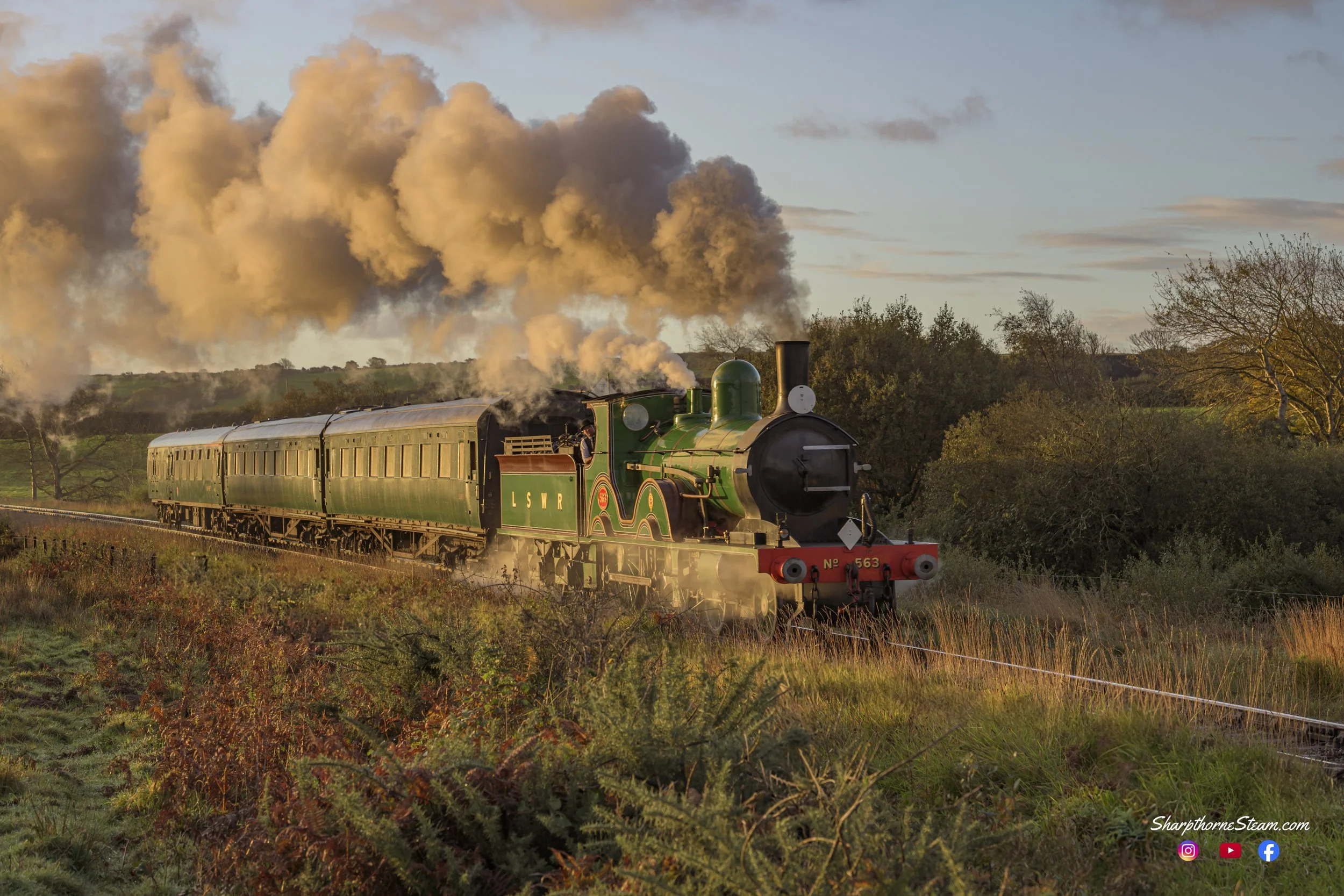
My first shot that I was truly happy with at a charter, came the following day after my first charter, during a TLE charter at Swanage. This shot was the beginning of a day that would be defined by lots of rain. You have to be prepared that some days will be a wash out, some will be a perfect and others will be middle of the road. Therefore, patience is a much needed commodity. What would I change in this shot, that I have learnt since then? Well firstly the camera I was using the Zf, I didn’t realise what 1/3 step meant on the rotary dials, so I thought I only had the option to move between 1/250th and 1/500th, if took this shot over, I would bump the shutter speed up to 1/400th for more sharpness and then bring the aperture down to f4 or 5.6 to stop my ISO from going up much higher than ISO250.
What Equipment do I need?
This may sound obvious, but ideally you’ll need a camera. Does it have to be a Nikon Z9 or a Canon R1? No. You will find photographers using a vast array of cameras, from mirrorless and DSLRs, to full-frame and Micro Four Thirds. Even film cameras make an appearance, adding that authentic 1960s feel. I have also seen people using phone cameras at charters—it really is about using the camera that suits you best.
Lenses are an important part of the day if you are bringing a camera. What are the best lenses to bring? Part of this comes down to personal preference. Are you a super-telephoto, impact-shot photographer, or do you prefer a more landscape-focused approach using an ultra-wide lens?
For me personally, the locomotive is the hero, but I also find it important to include some of the surroundings. This allows you to incorporate features such as signals and other trackside details, including gradient posts and mile markers. You should also bear in mind that you may be doing station shots as well. Therefore, my two trusty lenses for a day’s shooting are the Nikon Z 24–70mm f/4 for station work, and the Tamron Z 35–150mm for lineside photography and videography. Realistically, though, lenses covering roughly the 24–300mm range will give you the flexibility you need.
Do you need a tripod? That is debatable and largely depends on whether you are shooting stills only or a mixture of stills and video. I do a combination of both, so I usually take my tripod with me in its smaller configuration and carry it in one of my bag’s side pockets. It is easy to deploy when needed without being too bulky.
If your camera does not have good in-body stabilisation for video, you may want to seriously consider bringing a tripod. However, if it does, be aware that it can sometimes get quite compact at busy locations, so handheld filming may be the better option.
A good, solid pair of boots is well worth having. Walking on ballast (when permitted) can be painful in trainers or wellies without proper sole protection. While this is not essential, it is something I would highly recommend.
One essential item for any lineside charter is an orange hi-vis vest. Some railways may provide them, but I would not rely on this and would strongly suggest buying your own—it is a worthwhile investment. In terms of clothing, I would also recommend a good waterproof jacket. Ideally, it should not only protect you from the elements but also be large enough to shelter your camera inside for those all-too-common British rain showers.
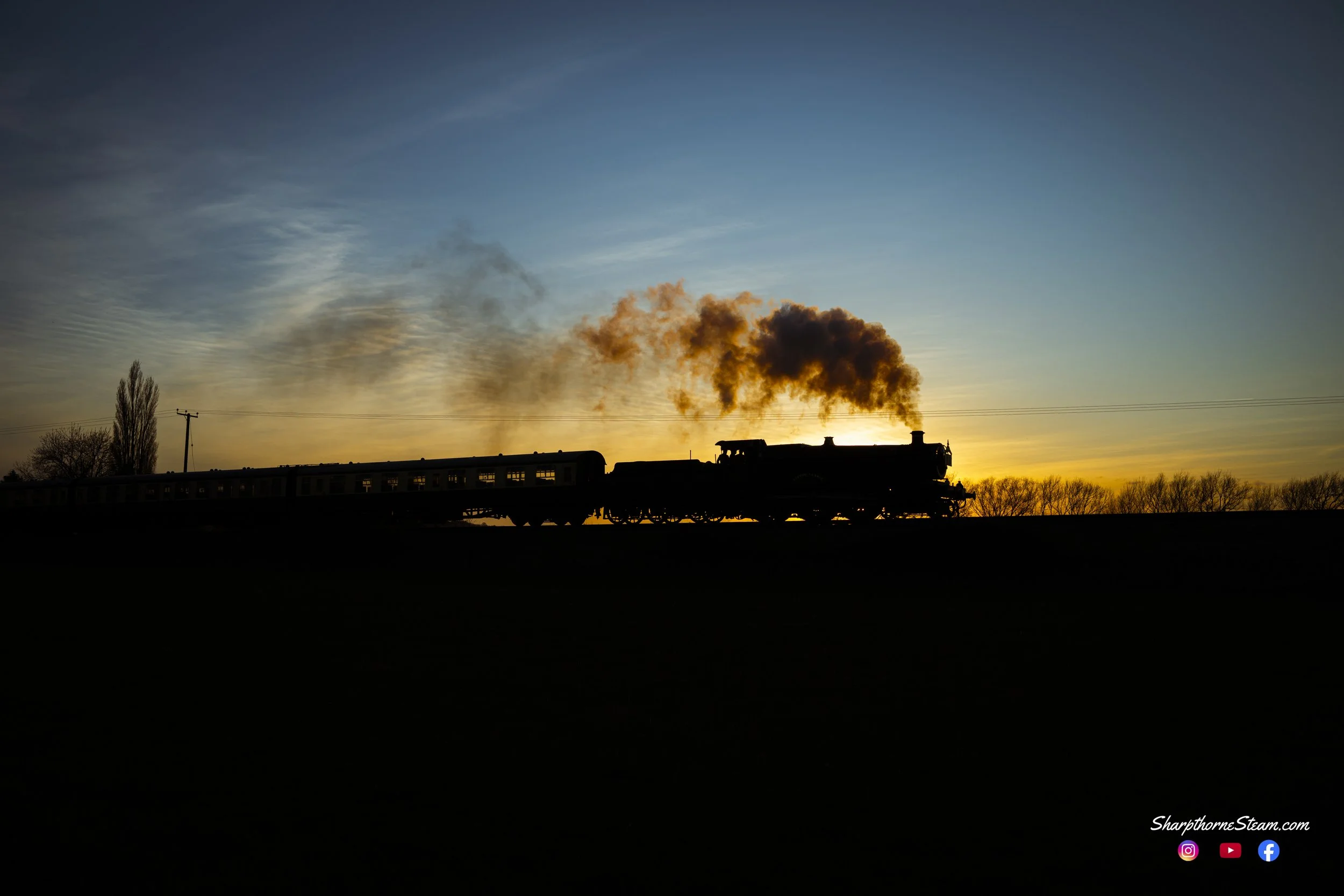
I had never shot a silhouette shot till I went on the charter last March with Jack Boskett, this ended a perfect day of photography. However, I had no idea how to get this shot, fortunately one of the gentleman on the charter, gave me some very quick pointers and as a complete novice, I managed to capture a shot I was pretty chuffed with. Asking really is getting all the information you need, sometimes.
What are the Rules at Charters?
The first and foremost rule of any charter is not to walk around when the locomotive is coming towards you or away from you. You never know if someone is lining up that perfect going away shot and you have just stepped in their way. Further to this, make sure that you are quiet for any photographers who are doing video. Be careful of your surroundings, especially when talking to fellow photographers, you never know when a signal cable or even a lose bit of ballast is going to trip you up when you are discussing that amazing shot you just got. Basically just use good old common sense and you can’t go far wrong in my opinion. However, all charters come with a safety briefing where the charter organiser will lay out the safety instructions of the day.
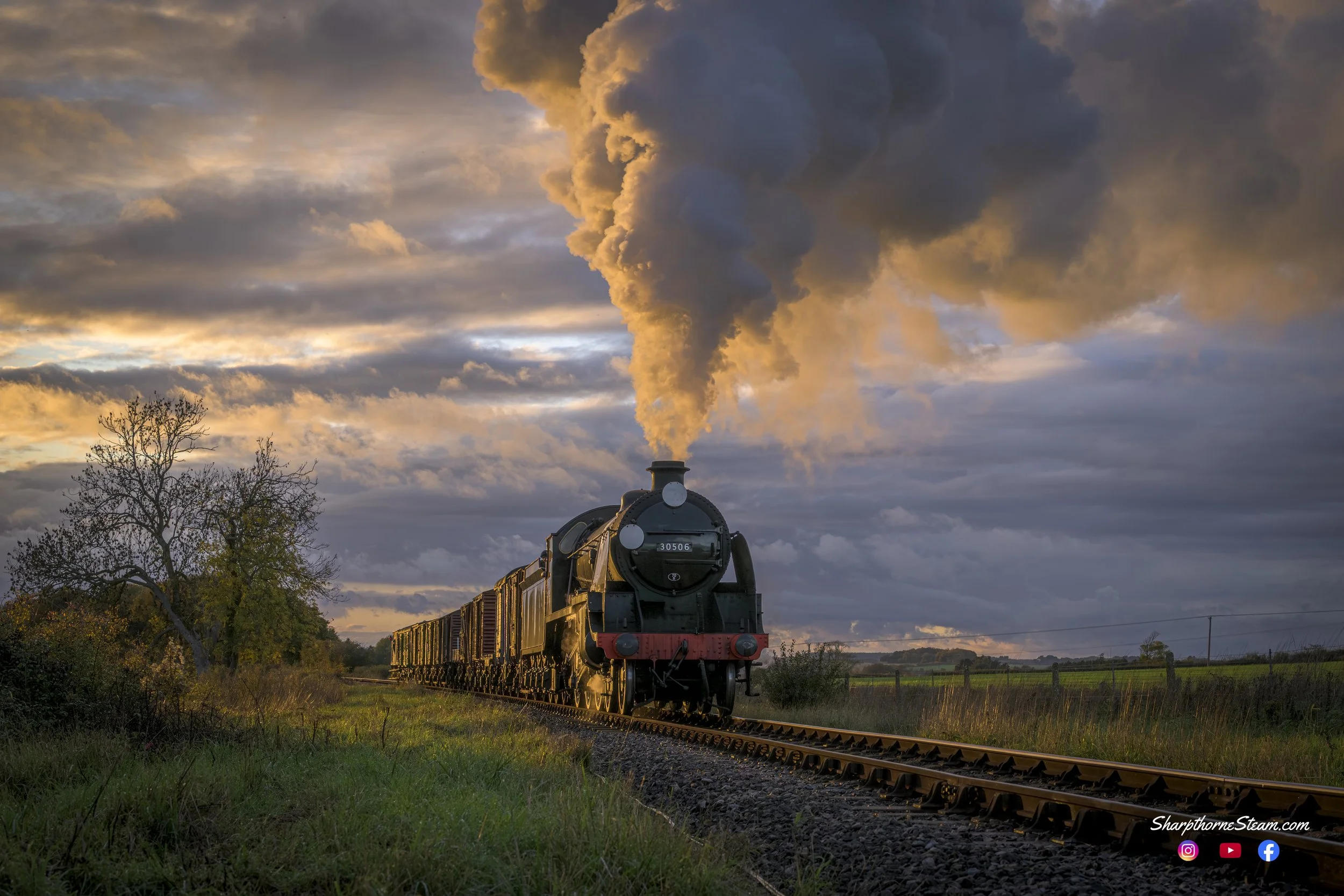
Sunset and sunrise shots are some of the best reasons to go on a charter, sometimes it can even rescue a day. In this example, the weather had been cloudy and then progressively more rain as the afternoon wore on. However, by the end of the day, a few fleeting moments of light allowed the gallery to get a nice sunset shot to end the day.
How do I Improve at Charters
Anyway, now that we have those sections out of the way, let’s look at some potential ways you can improve at charters.
When I went on my first charter in October 2024, I was a complete newcomer to photography and I would argue that even as I move into my fourth year of photography, I still am. At that point, I had less than a year’s experience with a camera. While there are countless videos covering bird photography, landscape photography, and more, there isn’t a great deal available specifically for train photography.
I’m not the most outgoing person in the world, but I do enjoy talking to people when we share a common interest. Because of this, I genuinely believe there is no better way to improve your photography than by talking to people at charters. A good number of photographers there have been shooting for many years and have built up an excellent knowledge base. Take an interest in their camera, I always seem to end up chatting with fellow Nikon users or sharing a light-hearted jab at a Canon owner. Before long, you’re exchanging stories, settings, and ideas. You never know, you may even meet someone using the same camera as you and be able to share information directly. As I did at Great Central when I was chatting away to a fellow Nikon Zf owner.
My main way of improving, though, has been to experiment with settings. Read, watch, and study the three core elements of photography: shutter speed, aperture, and ISO—they are key. I remember initially dismissing a fellow photographer’s (@robdoestrains) suggestion about using Auto ISO. However, in all honesty, I’ve since used it in testing on a number of occasions, particularly when light is changeable during autumn and winter, when the sun can appear and disappear in a drop of a hat. It works very well as a semi-manual mode: you control shutter speed and aperture to your heart’s content, while the camera rapidly adjusts the ISO.
That said, also have a play with shutter speeds, try a shot at 1/500th, then another at 1/1000th. With aperture, experiment with f/4, f/5.6, or f/8 and see which result you prefer. On top of this, you can usually find several different positions at each location, allowing you to try a variety of compositions. Don’t be afraid to move around the gallery between shots and look for new perspectives. After all, I discovered my love of low-angle shots at Swanage with the T3 departing Harmans Cross.
If you are a new photographer, I would recommend trying a semi-automatic mode on a charter, such as shutter priority or aperture priority. These can make a big difference to your results. Personally, I started almost immediately in full manual mode, I wanted to throw myself in at the deep end and learn from as many mistakes as possible. I’m guilty of wanting to understand as many aspects of photography as I could in the shortest possible time. Charters give you the opportunity to try different approaches and see what works for you. Once you’ve secured the shot you want, don’t be afraid to experiment further. Photography, I find is all about building confidence and taking that first step out of automatic, that is why I didn’t want to stay in auto for too long.
RAW photography, this is something I love. Almost from the start, I shot in RAW. In my head, I told myself, “I want the highest-resolution shots from my brand-new, expensive camera.” Shooting RAW gives you far more control during editing. You can recover highlights in clouds or exhaust far more effectively than with a JPEG file. You may still want JPEGs for quick edits, but I would strongly recommend trying RAW, as long as you have the ability to edit the files.
RAW files will teach you a great deal about editing and, by extension, about how to create a strong image in the first place. They shouldn’t be scary—they should be an extension of your photography. I’ve spent many evenings sitting at my PC, gradually learning more about editing RAW images as I go. I understand if that sounds daunting or even boring, but for me, the results are absolutely worth the time invested.
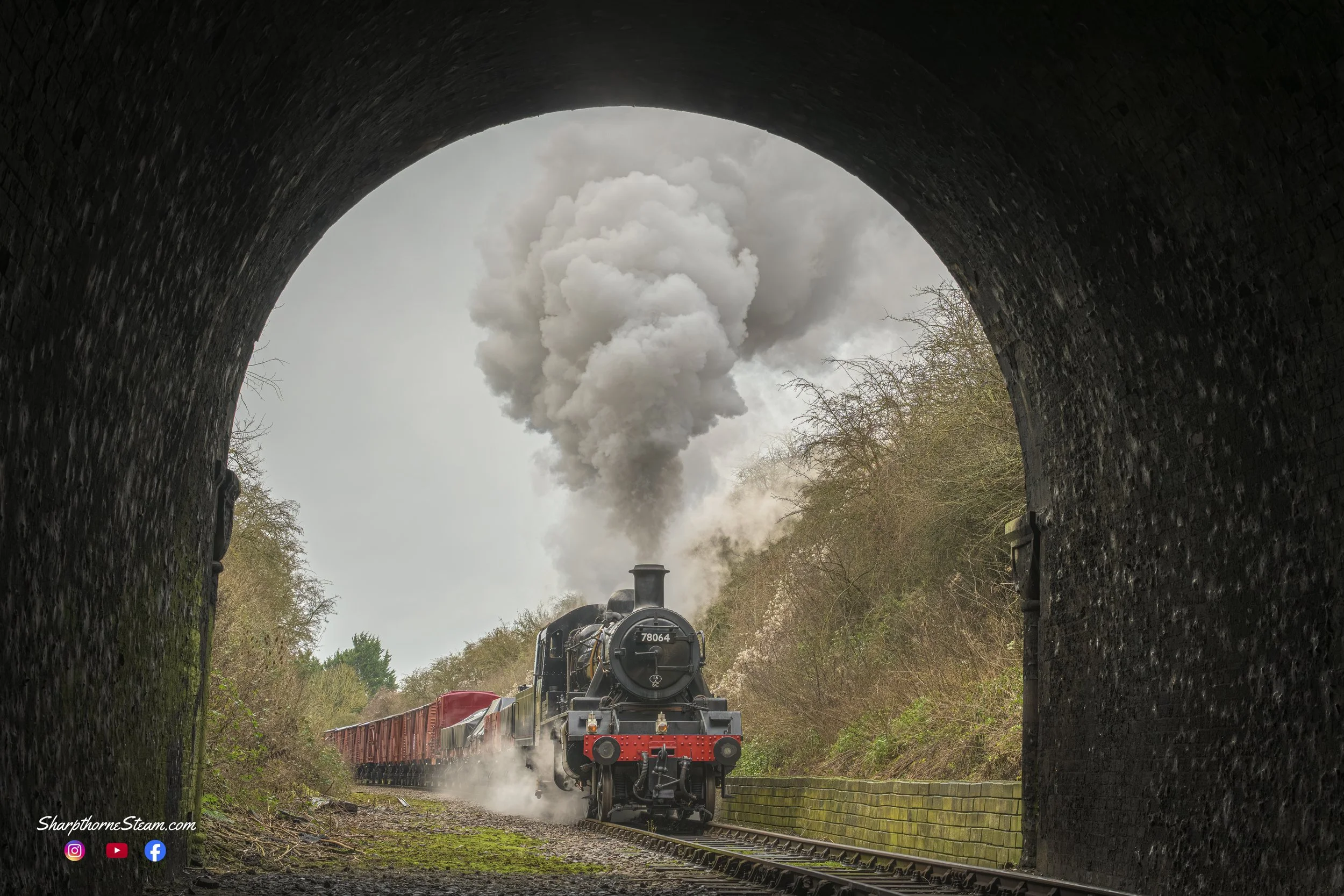
Sometimes, but not all the time by any stretch, you get to enjoy some very unique shots at railways, as these charters are done under supervision. This was a shot that didn’t expect to get at the beginning of the year.
Are Charters Worth the Money?
I am obviously biased, as I seem to be amassing a fair number of charters under my belt now. I’ve been on two charters at the Swanage Railway, one at the Bluebell Railway, one at the Great Central Railway, one at the Nene Valley Railway, one at the Mid-Hants Railway, one at the Gloucestershire Warwickshire Railway, and finally one at the Spa Valley Railway.
Have they all been complete successes with loads of fantastic photographs? No. But have they all been massive steps forward in my learning and overall knowledge? Absolutely yes.
Ultimately, it also depends on what type of charter you want. Personally, I love goods charters—there’s nothing more exciting than seeing vans, wagons, and brake vans pounding along the railway. After all, freight was the bread and butter of how the railways made their money. You may find that you’re drawn to a particular locomotive on a charter, perhaps a 9F or Fenchurch. For me, charters have also been invaluable for understanding new railways and learning where the best locations are, particularly at places like the Great Central and Nene Valley.
Whatever your reason for investing in a charter, the most important thing is that it’s about having fun and enjoying a day with one of your favourite locomotives or on a favourite railway.
Finally, how much money can you expect to pay for a charter? This very much depends on the locomotive and the nature of the event. If the locomotive is a visiting engine, you can generally expect to pay more than you would for a home-based locomotive. From my experience, I’ve attended railway-run charters costing around £100, while those organised by private companies can be closer to £130-150. It’s definitely worth thinking carefully about your choice, but if you love the locomotive, spending a day lineside with it is, in my view, absolutely worth it.
Top Tip: Remember to bring £5 or £10 for the crew of the locomotive and the volunteers that have helped make the day happen. I wasn’t aware of this at the time, but thankfully on my first charter, there was a Co-op at Swanage that had a cash point.
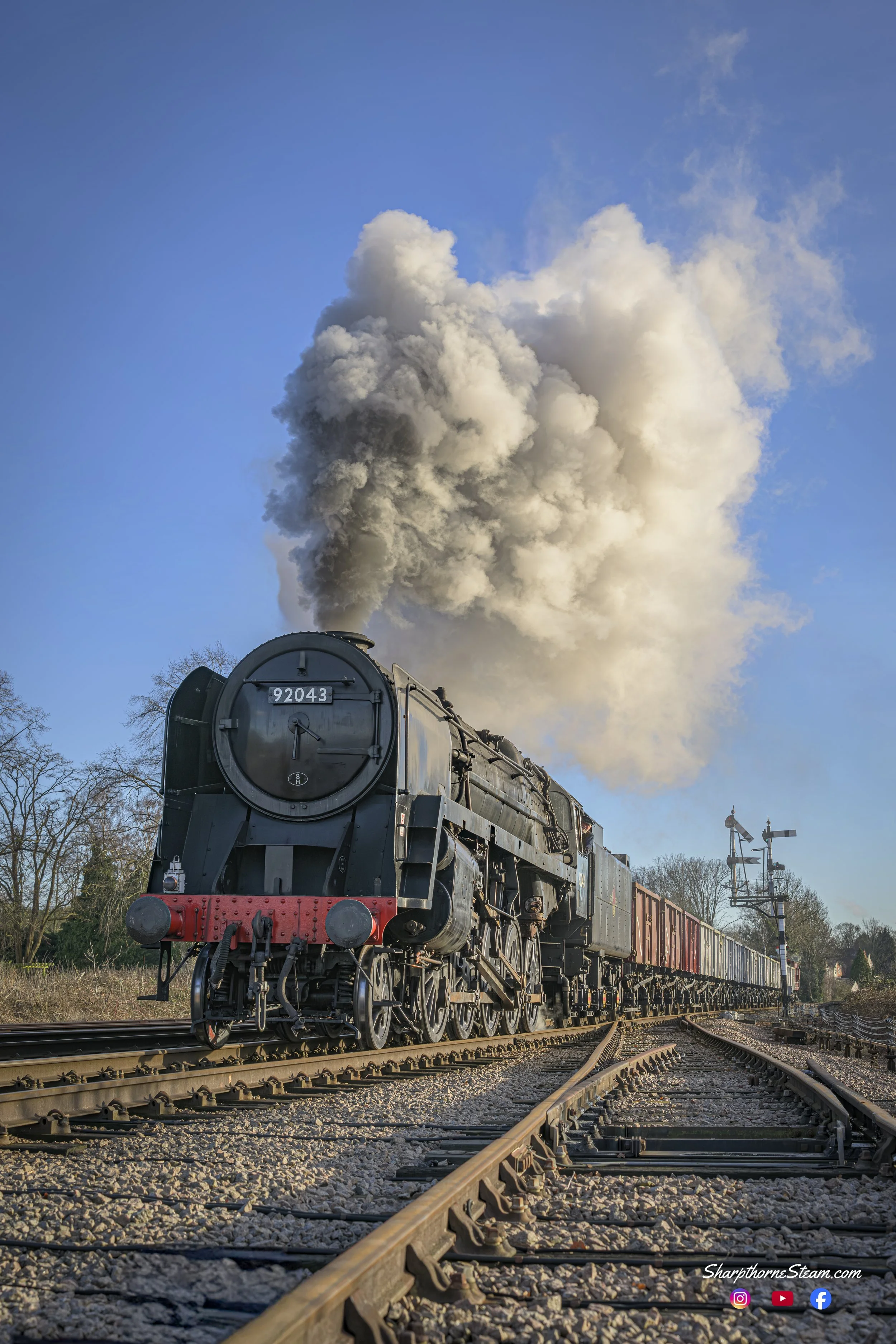
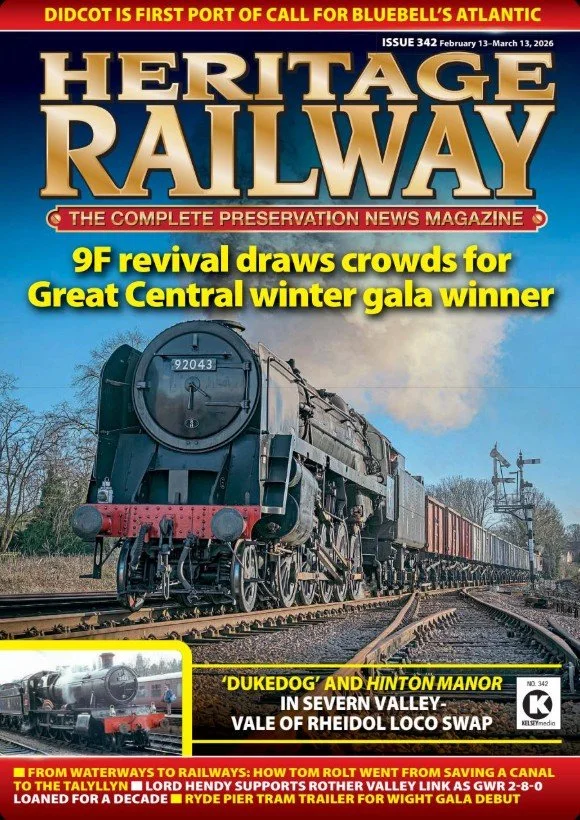
The shot that was featured on the front cover of Heritage Railway Magazine for February 2026 edition. Another unexpected surprise this year. Thank you to Owen for getting in touch with me around the use of this photo. A shot of the the North Yorkshire Moor’s 9F No92134 that had been renumbered to 92043, which was for a time based at Annesley.
Where do I Book Charters?
Where I started off on charters was with a company TLE or Timeline Events (timelineevents.org) they offer a great array of events up and down the country, not just steam, but also diesel and other adventures such as aircraft photography as well but they do offer a great array of Great Central and Didcot charters. Hoping for a Beachy Head at Didcot charter, fingers crossed! The next charter I went on was one with a fantastic photographer and fellow Nikon shooter, Jack Boskett, I happen across a 6880 “Betton Grange” charter on Jack’s Facebook but he does have a mailing list on his website to sign yourself up to get notified of his charters (https://www.jackboskett.uk). Here is where I will say, that Facebook is a great way to find charters as well. Especially charters run by the railways themselves, I found in the past few months ones from the Nene Valley and Ffestinog Railways. Another good source is 30742 charters, this has a great array of charters all over the country and although, I have only experienced one of their charters at Spa, but the blistering heat made it a charter that could have been a disaster, but it was handled brilliantly by both organiser and the Spa volunteers (https://www.tickettailor.com/events/30742charters/). There are many other great charter organisers out there and you can find some amazing charters to go on, so go out and enjoy your photography and experiment.
Thank you once again for reading this slightly different blog, I hope it has helped with any information about charters and maybe even inspired you to book yourself on one. Blogs, will be coming a bit more thick and fast now as we start to get into the season once again. Let me know on the socials if there is any other topics you would like to me to cover in terms of photography, I would love to hear your ideas for topics. Have a great weekend and hopefully see you lineside shortly.
Thank you for reading,
Sharpthorne Steam (Ben)